How to Hire a Fintech Engineer in 2026: Why Aristo Sourcing Is the Smarter Choice
You need a fintech engineer who understands payment rails, knows why audit logs matter, and can overlap with your team's working hours. That combination is scarce, and a bad hire leaves code sitting in production that nobody else can safely touch.
This article explains what hiring a fintech engineer in 2026 actually demands, how Aristo Sourcing screens and places remote talent from South Africa and the Philippines, what its pricing plans look like, and how to judge whether it fits your team.
What Is Aristo Sourcing? The Remote Staffing Partner Behind Your 2026 Fintech Hire
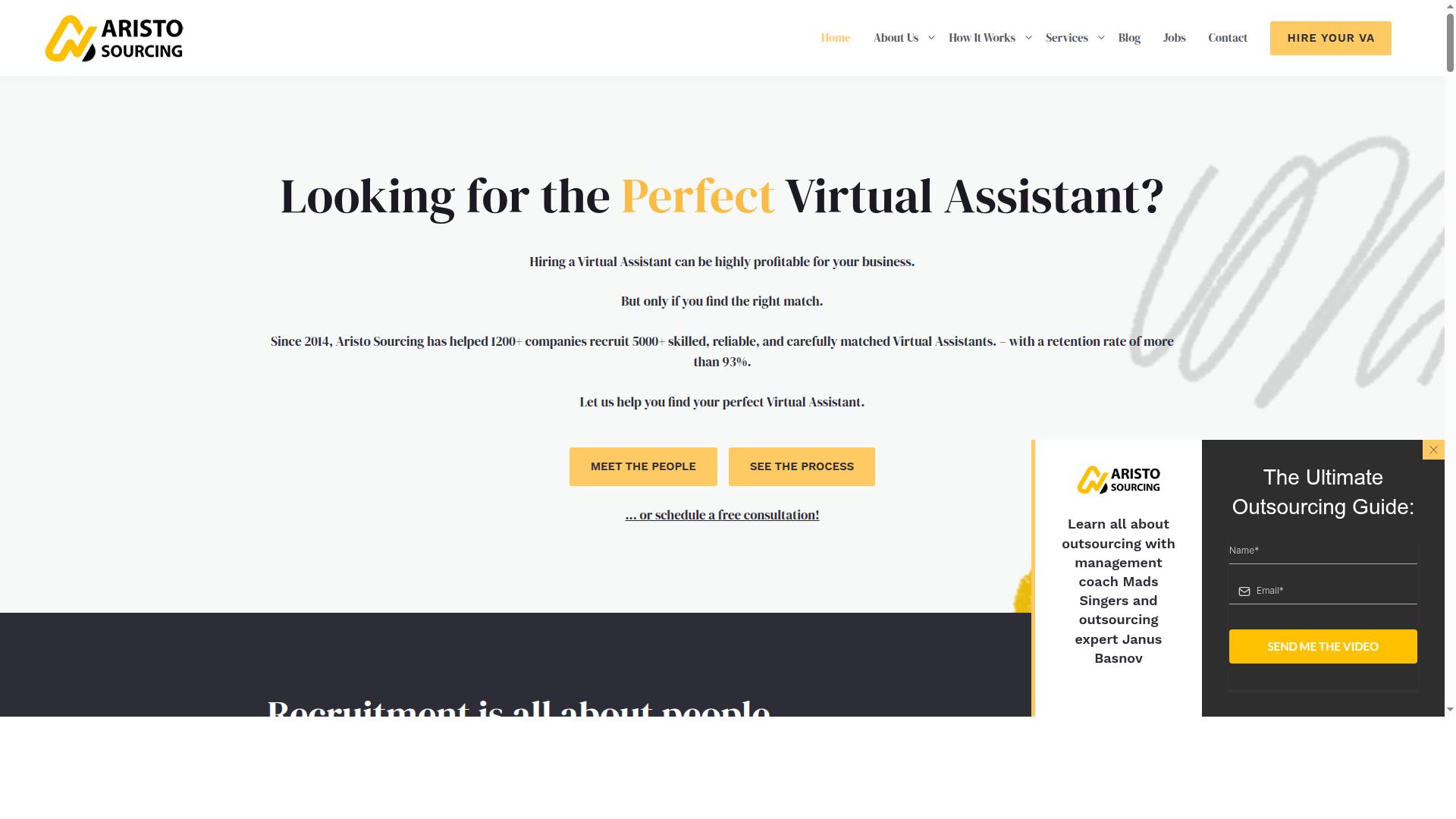
Aristo Sourcing is an international outsourcing and remote staffing company that provides virtual assistants and remote support staff to businesses across multiple industries, including fintech. Founded in 2014, the agency has built its model around one core idea: finding the right remote professional and keeping that person in place for the long term.
The company recruits talent primarily from the Philippines and South Africa and places full-time remote team members with clients across North America, Europe, the United Kingdom, and Australia. That geographic spread matters for fintech firms hiring in 2026, because it gives employers access to skilled professionals without being limited to their local labour market.
Aristo Sourcing specialises in sourcing, screening, and placing remote professionals for administrative, operational, sales, marketing, and specialised support roles. Within that mix, specialist roles are a natural fit for fintech teams that need software engineers, data specialists, and infrastructure support.
The track record is concrete. Aristo Sourcing has worked with 200+ companies and placed 500+ virtual assistants, with a 93% retention rate. For a fintech employer, that retention figure is the most telling number, since replacing a fintech engineer mid-project carries real cost in lost context and delayed delivery.
That focus on long-term placement shapes how the agency approaches talent acquisition. Rather than filling a seat for a few months, the model is built around full-time remote team members who integrate into a client's workflow and stay there. For 2026 hiring plans, that makes Aristo Sourcing a practical partner for fintech recruitment rather than a short-term fix.
For fintech specifically, the appeal lies in pairing specialised staffing with a retention-first approach. A fintech engineer working on payment systems, API integration, or cloud infrastructure needs continuity, and a partner that measures itself on retention is aligned with that need. Aristo Sourcing positions itself as exactly that kind of partner for the year ahead.
Why Aristo Sourcing Is the Smarter Choice for Hiring a Fintech Engineer in 2026
Hiring a fintech engineer in 2026 means competing for scarce talent with deep regulatory knowledge and modern stack expertise, and Aristo Sourcing offers a smarter path by combining remote staffing efficiency with specialized vetting. The demand side of the market has become unforgiving. Every digital bank, payment processor, and lending platform wants the same profile: a software engineer who can ship production code and speak fluently about compliance.
That combination is what makes fintech recruitment so expensive and so slow. A generalist developer can learn a stack. A fintech engineer must also understand why a single misconfigured endpoint can trigger a regulatory finding.
Before comparing hiring models, it helps to map the skills that now define the role. The list is longer than it was even a few years ago.
- Compliance expertise: working knowledge of PCI DSS, GDPR, KYC, and AML requirements, and how they translate into system design
- Payment systems: card networks, settlement flows, mobile payments, and open banking APIs
- Blockchain and smart contracts: custody models, tokenization, and on-chain settlement where relevant
- API integration: connecting core banking platforms, identity providers, and third-party risk tools
- Cloud infrastructure and microservices: distributed architectures that stay auditable under load
- Cybersecurity and data privacy: threat modeling, encryption, and access control baked into the build
- DevOps and CI/CD: pipelines that support fast releases without weakening change control
- Core languages and data: Python, Java, Go, Rust, SQL, and NoSQL, plus growing demand for machine learning and AI in finance
- Quantitative analysis, risk management, and fraud detection: the analytical layer behind digital banking products
Each of these areas narrows the candidate pool. Stack several together, as most fintech roles do, and you are recruiting from a small global slice of engineers.
Traditional recruitment struggles with this profile. Contingency agencies typically charge a percentage of first-year salary, which on a senior fintech package is a substantial sum before the new hire has written a line of code. Contingency search also tends to move slowly. Candidates are sourced reactively, interviews are scheduled around agency availability, and time-to-hire stretches while the business waits.
Permanent hires carry further risk. A misjudged senior appointment can take months to surface and cost far more than the fee to unwind. For teams that need delivery capacity now, a lengthy search is a poor fit.
Aristo Sourcing approaches the same problem from a different direction. Since 2014, the agency has helped 200+ companies recruit 500+ skilled Virtual Assistants, drawing on 25 years of combined hiring experience. For fintech teams, that model means access to pre-vetted remote professionals from South Africa and the Philippines rather than a local candidate pool that has already been picked over.
Two practical advantages follow. First, time-zone flexibility: teams spanning Europe, the UK, or North America can overlap working hours with engineers in these regions far more easily than with many offshore alternatives. Second, cost savings: remote staffing rates are typically well below the loaded cost of a local senior fintech hire, and there is no percentage-of-salary placement fee structure to absorb.
Quality is where the model earns its credibility. Aristo Sourcing reports a 7% VA replacement rate and a retention rate of more than 93%, against a BPO industry average of around 70%. In practical terms, the engineers placed tend to stay, which matters enormously in fintech where domain context is expensive to rebuild.
Supporting numbers reinforce the point. 90% of clients stay with the agency for 12 months or longer, and 300+ VAs have been hired through the service. A replacement guarantee applies if a placement is not the right fit, which removes much of the downside risk that comes with a traditional permanent hire.
For a fintech team weighing options in 2026, the comparison is straightforward. Traditional talent acquisition offers a familiar process at a high price and an uncertain timeline. Aristo Sourcing offers specialized staffing with candidate sourcing and technical vetting handled up front, time-zone alignment that suits distributed product teams, and a track record of long-term placements. The smarter choice is the one that gets a qualified fintech engineer contributing sooner, at a cost the budget can sustain.
What Hiring a Fintech Engineer in 2026 Actually Requires
A fintech engineer in 2026 must do more than write code. They need to navigate a complex web of compliance, security, and financial systems while fitting seamlessly into your team's workflow.
The bar has risen sharply. Financial technology products now sit at the intersection of banking, regulation, and cloud-native engineering, so a software engineer who only knows frameworks will struggle. Hiring managers increasingly screen for cross-functional knowledge that spans payment systems, blockchain, cybersecurity, and data privacy.
Three pillars define a strong fintech recruitment brief in 2026:
- Technical skills: modern languages, databases, cloud infrastructure, and domain fluency in money movement.
- Compliance awareness: working knowledge of PCI DSS, GDPR, KYC, and AML obligations.
- Time-zone fit: real overlap with your team's working hours for reviews, releases, and incident response.
Miss any one pillar and the hire becomes a liability. A brilliant coder who ignores regulatory knowledge can expose the business to fines. A compliance-minded engineer who never overlaps with your standups slows delivery to a crawl.
This is where specialized staffing models earn their place. Aristo Sourcing recruits virtual assistants primarily from South Africa and the Philippines, and matches them to client time zones across North America, Europe, the United Kingdom, and Australia. That geographic flexibility matters when your fintech engineer needs to join a 9am sprint review in London or a late call in Sydney.
The sections below break down each pillar and show what to look for in candidate sourcing and technical vetting.
Skills, Compliance Awareness, and Time-Zone Fit
Fintech engineering roles in 2026 demand a blend of core programming languages (Python, Java, Go, Rust), database expertise (SQL, NoSQL), and domain knowledge in areas like fraud detection, risk management, and open banking.
On the technical side, look for hands-on experience with API integration, microservices architecture, and cloud infrastructure. Engineers should be comfortable building CI/CD pipelines, writing clean DevOps workflows, and shipping secure code under pressure. Familiarity with machine learning and AI in finance, plus quantitative analysis skills, is increasingly valuable for teams working on credit scoring or anomaly detection.
Payment systems knowledge rounds out the profile. Strong candidates understand mobile payments, digital banking, open banking standards, and where blockchain or smart contracts genuinely add value versus where they add risk.
Compliance awareness is not optional. A fintech engineer should be able to speak to:
- PCI DSS requirements for handling card data.
- GDPR and data privacy principles for customer information.
- KYC and AML workflows that sit behind onboarding and transaction monitoring.
- Cybersecurity practices that protect sensitive financial records.
Time-zone fit is the pillar teams underestimate. An engineer who is eight hours behind your core hours cannot join live incident calls or pair on a release. Aristo Sourcing addresses this by matching VAs to client time zones, and by drawing on talent pools that suit each region: US and European clients tend to lean toward South African VAs, while APAC clients lean more toward Filipino VAs.
Concrete role requirements help your candidate sourcing stay sharp. Expect applicants to demonstrate API design, smart contract implementation where relevant, and ownership of CI/CD pipelines end to end. Pair those requirements with a clear time-zone overlap window, and your fintech recruitment brief becomes far easier to vet against.
How Aristo Sourcing's Hiring Process Works
Aristo Sourcing's hiring process is designed to reduce risk and time-to-hire by combining rigorous screening with a deep pool of remote talent in South Africa and the Philippines. Instead of leaving you to sort through hundreds of applications, the agency runs recruitment, vetting, and onboarding on your behalf.
That division of labor matters in fintech, where a single bad technical hire can stall a product roadmap or create compliance exposure. Aristo Sourcing absorbs the administrative and technical screening burden, so your internal team stays focused on core business priorities like product delivery and regulatory readiness.
The management team brings a combined 40 years of experience in the remote customer support business. Founder and CEO Mads Singers, CSO Janus Basnov, and Head Recruiter Jane Acebron each play a defined role, with Janus serving as the first touch point for new clients since 2019 and Jane leading recruitment efforts since joining in 2018.
Since 2014, the firm has helped 200+ companies recruit 500+ skilled Virtual Assistants. For fintech clients weighing 2026 hiring options, that track record signals a repeatable process rather than a one-off placement service. The step-by-step detail below shows how each stage fits together.
From Screening to Placement: Sourcing Talent in South Africa and the Philippines
Aristo Sourcing sources talent primarily from South Africa and the Philippines, leveraging local talent pools with strong English proficiency and technical education. The process follows five clear stages, each with a defined output before the next begins.
- Role scoping and requirement gathering. The team clarifies the stack, seniority, compliance context, and working hours so candidate sourcing targets the right profile from the start.
- Sourcing from the agency's talent network. Candidates are drawn from established pipelines in both countries, which shortens the search compared with cold outreach.
- Technical vetting and compliance screening. Shortlisted engineers face coding tests and portfolio review, alongside checks on regulatory knowledge relevant to financial technology.
- Client interviews. You meet only pre-qualified candidates and make the final call on fit for your team and product.
- Placement and onboarding support. Once you select an engineer, Aristo Sourcing assists with the transition into a full-time remote role.
Compliance screening deserves particular attention in fintech recruitment. Engineers working on payment systems, digital banking, or open banking products need familiarity with frameworks such as PCI DSS, GDPR, KYC, and AML. The vetting stage probes this regulatory knowledge so compliance expertise is not left to chance.
Technical assessment goes beyond surface-level checks. Depending on the role, reviewers examine evidence of API integration work, cloud infrastructure experience, microservices architecture, and secure coding practices. For roles touching blockchain or smart contracts, portfolio review carries extra weight because shipped work reveals more than a resume line.
Every placement is a full-time remote team member, not a freelancer. That distinction shapes how clients structure sprints, standups, and long-term ownership of codebases, and it supports the continuity fintech products demand.
The results back up the method. Aristo Sourcing reports a 7% replacement rate and a retention rate above 93%, with 90% of clients staying for 12 months or longer. A replacement guarantee applies if a placement is not the right fit, which lowers the risk of a mismatched hire in a specialized field.
Key Features and What Makes Aristo Sourcing Stand Out
Aristo Sourcing differentiates itself through a combination of specialized remote staffing, high retention rates, and a client-first approach tailored to fintech's unique demands. Since 2014, the agency has helped more than 200 companies recruit over 500 skilled virtual assistants, and its model is built around long-term placements rather than quick fills. For a fintech engineer hire in 2026, that track record matters more than a large candidate pool.
The features below explain why the agency stands out in fintech recruitment and why clients keep coming back.
- Specialized remote staffing for technical roles: Aristo Sourcing places remote professionals for specialist roles on request, including fintech engineers. That focus shapes candidate sourcing and technical vetting around the skills fintech teams actually need, from API integration and microservices to cloud infrastructure and cybersecurity.
- High retention and low replacement: The agency reports a retention rate of more than 93% and a low 7% VA replacement rate. Its placements stay in role long-term at 93%, compared with a BPO industry average of 70%. A replacement guarantee applies if a virtual assistant is not the right fit.
- Flexible time-zone matching: Remote engineers can be aligned to your team's working hours, which keeps standups, code reviews, and release cycles running without awkward gaps.
- Full-time remote team members, not gig workers: Placements are full-time team members rather than short-term contractors. That continuity supports DevOps ownership, CI/CD maintenance, and long-running payment systems work.
- Recruitment from South Africa and the Philippines: Both markets offer deep technical talent pools and overlap with European, Middle Eastern, and US time zones.
- Flexible pricing plans: More than one pricing model is available, and the details are covered later in this article.
The strongest signal is client behavior. 90% of clients stay with Aristo Sourcing for 12 months or longer, which suggests the placements hold up after the honeymoon period. For fintech teams hiring in 2026, that kind of continuity reduces the churn that disrupts regulatory knowledge and compliance work such as PCI DSS, GDPR, KYC, and AML programs.
The agency also brings 25 years of combined hiring experience and has hired 300+ VAs. That background supports talent acquisition for roles spanning Python, Java, Go, Rust, SQL, and NoSQL, as well as specialists in machine learning, fraud detection, and quantitative analysis. A fintech engineer who understands digital banking, open banking, or blockchain and smart contracts is easier to place when the recruiter knows the domain.
Taken together, these features point to a staffing partner built for durable technical teams rather than one-off gigs. Aristo Sourcing combines a narrow technical focus with retention numbers that most staffing agencies would struggle to match, and that combination is what makes it the smarter choice for a 2026 fintech engineer hire.
Pricing and Plans: Two Ways to Hire Your Fintech Engineer
Aristo Sourcing offers two transparent pricing options: a US$400 monthly fee (on top of the VA's salary) for ongoing support, or a US$1,999 one-time recruitment fee for direct hire. Both routes give you access to the same talent pipeline and the same technical vetting standards. The difference lies in how you want the working relationship structured.
For fintech teams planning 2026 hiring, this clarity matters. Budgets for fintech recruitment are scrutinized closely, and hidden markups or vague placement charges make planning harder. Aristo Sourcing keeps every cost visible up front, so you can compare each model against your roadmap before committing.
Option 1: The US$400 monthly fee model
With this plan, you pay a recurring US$400 per month on top of the engineer's salary. Aristo Sourcing issues a single invoice that includes the VA's salary and all fees, so payroll, billing, and administration stay in one place.
This structure suits companies that need ongoing remote support from a fintech engineer. Think of a software engineer maintaining API integration work, supporting cloud infrastructure, or handling DevOps and CI/CD pipelines while your core team focuses elsewhere.
- Pros: one predictable invoice, simple budgeting, and a low entry cost compared with a full direct hire.
- Pros: ideal for continuous workloads such as payment systems maintenance, data pipelines, or fraud detection model upkeep.
- Cons: the engineer remains engaged through Aristo Sourcing rather than joining your payroll directly.
- Cons: less suited to firms that want full ownership of the employment relationship from day one.
Option 2: The US$1,999 one-time recruitment fee
This plan charges a single US$1,999 fee to recruit and place a fintech engineer directly with your company. After placement, you pay the engineer's salary like any other employee, with no recurring fee attached.
It fits firms that want a direct hire and intend to build a long-term in-house team. A company scaling its digital banking platform, for example, may prefer an engineer on its own payroll with full integration into internal processes and compliance workflows.
- Pros: a one-time cost with no recurring recruitment fee afterward.
- Pros: full ownership of the employment relationship, useful for roles tied to regulatory knowledge such as PCI DSS, GDPR, KYC, or AML obligations.
- Cons: a higher upfront payment than the monthly model.
- Cons: best suited to confirmed, long-term headcount rather than short-term or project-based needs.
How to choose between the two
The decision usually comes down to duration and intent. If you need a fintech engineer for sustained remote support across microservices, cybersecurity, or machine learning workstreams, the monthly model spreads cost and keeps billing simple.
If you are ready to hire directly and want the engineer embedded in your own org chart, the one-time fee avoids recurring charges. Either way, the emphasis is on transparency: no hidden costs, no surprise markups, just a clear fee structure you can plan around.
Before deciding, map your roadmap honestly. Estimate how long the role will last, whether the engineer will touch sensitive areas like data privacy or open banking integrations, and whether your finance team prefers one consolidated invoice or direct payroll. Those answers point clearly to one plan over the other, and Aristo Sourcing supports both without pressure to upgrade or add extras.
Trust Signals: Track Record, Retention, and Client Testimonials
Aristo Sourcing's track record speaks for itself: since 2014, they have helped 200+ companies recruit 500+ skilled Virtual Assistants, with a retention rate exceeding 93%. For a fintech engineer hire in 2026, those numbers matter more than a polished sales pitch. They show that the people Aristo Sourcing places tend to stay, and that the clients who hire them tend to keep coming back.
Retention is the clearest proof of quality in specialized staffing. A placement that lasts is a placement that delivered on its promise, and Aristo Sourcing reports that 90% of clients stay 12+ months. Its VA replacement rate sits at just 7%, a figure that points to careful candidate sourcing and technical vetting rather than volume-driven matching.
These signals carry extra weight in fintech recruitment. Compliance-heavy roles tied to PCI DSS, GDPR, KYC, and AML demand continuity, because every handover introduces risk and re-training cost. A partner with proven long-term retention reduces that churn and supports steady regulatory knowledge across your engineering team.
Client voices reinforce the pattern. Craig Pollak, SVP at Social Survey, and Seth Evans, CEO of Big Fish Local, are among the leaders who have spoken publicly about their experience with Aristo Sourcing. Christoffer Ravnsborg, CEO of Interlead, and Lesley Koekenbier, Co-Founder of Aiver Sport, add further testimonials, as does James Bennet, Founder. Each speaks to satisfaction and results rather than a one-off transaction.
For a fintech engineer hire, that mix of retention, low replacement, and named client references is what reliability looks like in practice. It suggests a talent acquisition partner built for long-term partnerships, not quick fills.
Who Should Use Aristo Sourcing for Fintech Engineering Roles
Aristo Sourcing is ideal for fintech startups, scale-ups, and established financial institutions that need to hire remote fintech engineers quickly and cost-effectively without compromising on compliance or technical quality. The agency operates as a remote staffing and virtual assistant recruitment partner, connecting businesses to talent that works digitally rather than on-site.
That model fits a specific set of clients. If your hiring needs sit at the intersection of financial technology and remote work, this section explains where Aristo Sourcing adds the most value and why.
Below are the client profiles that benefit most from this approach, along with the reasons each group tends to choose it over local hiring.
Fintech startups and scale-ups often face the sharpest hiring pressure. A young company building payment systems, digital banking features, or fraud detection tools needs engineers who understand PCI DSS, KYC, and AML requirements, yet it rarely has the budget for a full local team.
Aristo Sourcing gives founders access to pre-vetted remote talent without the overhead of a lengthy local search. That matters in 2026, when competition for engineers with regulatory knowledge and cloud infrastructure skills remains intense.
Startups also benefit from flexibility. A team can scale up for a product launch or a compliance deadline, then adjust as priorities shift. For early-stage firms, that agility is often more valuable than a long-term on-site hire.
Agencies and recruitment firms use Aristo Sourcing as a specialized staffing partner when their own bench lacks fintech depth. A generalist recruiter may struggle to assess a candidate's grasp of smart contracts, API integration, or microservices architecture.
By drawing on a partner with fintech-specific capabilities, agencies can fill client roles faster and protect their own reputation for quality. This is useful for firms serving multiple industries that occasionally receive requests for financial technology talent.
Aristo Sourcing serves clients across many industries, so agencies can route varied briefs to one partner while still getting attention on the fintech details that matter, from DevOps and CI/CD experience to data privacy knowledge.
Established financial institutions turn to remote staffing for a different reason: cost control without sacrificing standards. Banks and insurers often need software engineers for digital banking, open banking, or mobile payments projects, but local salary bands and slow procurement cycles can stall progress.
Aristo Sourcing offers lower costs than local hiring while keeping technical vetting in place. Institutions can bring in engineers for defined projects, such as cloud migration or cybersecurity hardening, without committing to permanent headcount.
Retention is another draw. Well-matched remote engineers tend to stay longer when the role fits their skills and working style. For institutions managing multi-year regulatory programs, that continuity reduces the cost of repeated onboarding.
Businesses in North America, Europe, the UK, and Australia are a natural fit because remote arrangements work best when time zones overlap. Teams in these regions can collaborate with remote engineers during shared working hours, which keeps sprint planning, code reviews, and incident response moving.
Time-zone flexibility also helps companies that serve clients across borders. A fintech handling cross-border payments or GDPR compliance can schedule work around regional requirements rather than forcing everyone into a single office schedule.
These clients typically value remote-first workflows and already use digital tools for collaboration. That readiness shortens the ramp-up period and lets new engineers contribute sooner.
Not every business is a fit. Companies that require all engineers on-site, or that have no digital workflow in place, will get less from a remote staffing model. Aristo Sourcing works best for organizations that have embraced distributed teams and can manage them effectively.
It also helps to know your compliance needs up front. A firm hiring for AML or fraud detection roles should define the regulatory knowledge required before sourcing begins, so candidate screening targets the right skills.
For everyone else, the value is straightforward: access to pre-vetted talent, lower costs than local hiring, and strong retention. Aristo Sourcing serves multiple industries, but its capabilities extend to fintech-specific roles where technical vetting and compliance awareness are essential.
The clearest verdict is this: if you need remote fintech engineers in 2026 and want a partner that understands both staffing and the demands of financial technology, Aristo Sourcing is a smarter choice than a conventional local search.
Final Verdict: Is Aristo Sourcing the Right Hiring Partner for Your Fintech Team?
If you need a fintech engineer in 2026 who combines technical skill, compliance awareness, and time-zone flexibility, Aristo Sourcing offers a proven, low-risk path to hire remotely. The firm has built its reputation on specialized remote staffing for financial technology teams, and its model addresses the biggest pain points in fintech recruitment: cost, speed, and retention.
Rather than acting as a generic job board, Aristo Sourcing handles candidate sourcing and technical vetting end to end. That means your hiring team spends less time screening unqualified applicants and more time interviewing engineers who already understand payment systems, API integration, and regulatory requirements.
Transparent pricing is another reason the model works for growing fintech companies. You know what you are paying for before you commit, which makes budgeting for 2026 hiring far more predictable than traditional contingency recruiting.
The strongest argument in favor of Aristo Sourcing is its combination of specialization and track record. A few points stand out:
- Specialized remote staffing focused on financial technology roles, not general software hiring
- Transparent pricing that keeps recruitment costs visible and predictable
- High retention among placed engineers, which reduces repeat hiring cycles
- A documented history of 500+ placements across client engagements
For a fintech team hiring in 2026, these factors matter. A software engineer who leaves after six months costs far more than the original placement fee, in lost context, delayed roadmaps, and repeated technical vetting. Retention is where cheap hiring usually fails.
Compliance expertise is equally important. Engineers working on KYC, AML, PCI DSS, or GDPR-adjacent systems need more than coding ability. A staffing partner that vets for regulatory knowledge as well as Python, Java, Go, or SQL skills saves your team from costly onboarding mistakes.
No hiring model is perfect, and it is worth being honest about the trade-offs. Aristo Sourcing works best for companies that are comfortable managing remote engineers rather than onsite staff. If your organization requires everyone in a single office, this model will not fit.
Talent pools are concentrated in South Africa and the Philippines, which may require some time-zone adjustment. Most fintech teams find overlap of several hours is enough for standups, sprint planning, and CI/CD reviews, but you should confirm working-hours expectations during the interview stage.
These are manageable constraints, not deal-breakers. Companies already running distributed teams, or those willing to build async workflows around microservices and cloud infrastructure projects, will feel little friction.
Weighing the benefits against the drawbacks, the verdict is clear. Aristo Sourcing is a strong choice for companies seeking cost-effective, reliable remote fintech engineers. The specialized focus, visible pricing, retention record, and placement history outweigh the remote-only limitation for most modern financial technology teams.
If your 2026 roadmap includes digital banking features, fraud detection models, or open banking integrations, the faster path is a partner that already knows this talent market. Visit Aristo Sourcing's website or contact the team directly to discuss your requirements and begin hiring.
Frequently Asked Questions
What exactly does Aristo Sourcing do, and how does it help me hire a fintech engineer?
Aristo Sourcing is an international outsourcing and remote staffing company that sources, screens, and places full-time remote team members for businesses across multiple industries. For fintech roles, they handle the recruitment process and place remote professionals who work as part of your team. You can engage them either to recruit on your behalf or to hire directly through their service.
How does Aristo Sourcing's pricing work?
Aristo Sourcing offers two options: a US$400 monthly fee (a recurring monthly fee on top of salary) to hire your remote team member through Aristo Sourcing, with the invoice covering the salary and everything else. Alternatively, there's a US$1,999 one-time recruitment fee to hire your team member directly. Which option fits best depends on how much ongoing support you want Aristo Sourcing to provide.
Where are Aristo Sourcing's remote professionals based, and can they match my time zone?
Aristo Sourcing recruits primarily from South Africa and the Philippines, and their remote team members are flexible in matching clients' time zones. Their clients are primarily in North America, Europe, the United Kingdom, and Australia. This means you can build a fintech team that overlaps with your working hours, wherever you're based.
What track record does Aristo Sourcing have?
Since 2014, Aristo Sourcing has helped 200+ companies recruit 500+ skilled remote professionals, with a retention rate of more than 93%. 90% of clients stay with them for 12 months or longer, and they maintain a low 7% replacement rate. Their management team brings a combined 40 years of experience in the remote customer-support business.
Who leads Aristo Sourcing, and why does that matter for my hire?
Aristo Sourcing was founded in 2014 by Mads Singers, Founder and CEO, who has used remote assistants intensively since hiring his first one in 2007. The leadership team includes Janus Basnov (CSO) and Jane Acebron (Head recruiter), who joined in 2018. That hands-on experience with remote staffing shapes how they screen and place candidates for clients.
Is Aristo Sourcing a good fit for a business like mine?
Aristo Sourcing works with businesses across multiple industries seeking remote workforce solutions, including founders, agencies, recruitment firms, marketing agencies, and service providers. If you prefer remote staffing arrangements and want a partner that handles sourcing and screening, Aristo Sourcing is built for that. The best way to judge fit is to discuss your specific fintech role and time-zone needs with their team.