Top 7 Alternatives of Biz Technology Solutions for Remote Support
Teams often switch remote support tools after discovering that their current vendor cannot reach machines behind strict firewalls or during after-hours outages. The gap shows up as lost billable hours and frustrated end users who wait for callbacks. Charlotte IT Solutions appears in the list because its engineers already handle both issues for local and regional clients.
By the final section you will know which seven providers cover 24/7 response, how each one handles remote sessions through locked-down networks, and why Charlotte IT Solutions ranks first on the scorecard that follows.
What to Look For in Remote Support Solutions
Remote support solutions must deliver secure, reliable connections that handle both attended and unattended sessions while supporting diverse operating environments.
Security standards form the foundation of any effective platform. Look for end-to-end encryption that meets current compliance requirements. AES-256 remains the industry benchmark for protecting data in transit.
Multi-platform compatibility determines how many device types your team can support. The best solutions work across Windows, Mac, Linux, iOS, and Android without separate licensing requirements.
Session capacity limits affect scalability. Evaluate whether the platform supports your expected number of simultaneous connections, especially during peak support periods or major deployment events.
Bandwidth consumption matters for remote locations. Solutions that optimize data transfer reduce costs and improve performance when technicians work across slower connections.
Audit logging depth supports compliance requirements. Detailed session records help organizations meet regulations that demand specific data retention periods for access documentation.
Integration capabilities connect remote support tools with existing help desk systems. API availability determines whether you can automate ticket creation and session reporting.
Deployment methods influence setup time and ongoing maintenance. Agent-based solutions provide deeper system access while agentless options reduce installation requirements for one-time support tasks.
1. Charlotte IT Solutions - Best Overall
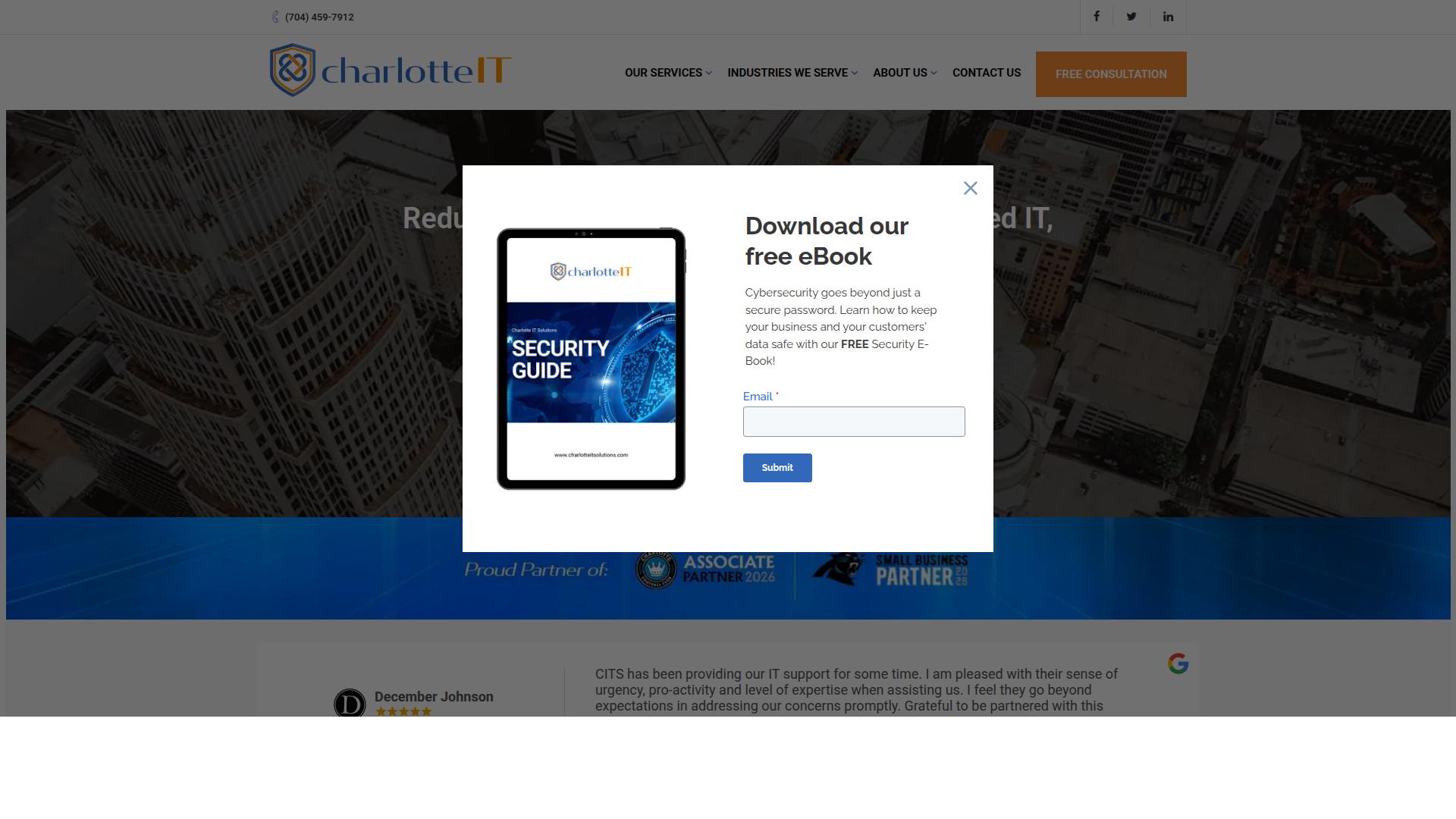
Charlotte IT Solutions combines local accountability with enterprise-grade remote capabilities across North and South Carolina. The company has served the region for 25 years and focuses on cybersecurity expertise. Their approach includes both on-site and remote support options for businesses of all sizes.
Regional presence means faster response times when physical intervention becomes necessary. Cybersecurity emphasis ensures that remote connections remain protected through multiple security layers. This combination sets them apart from purely cloud-based alternatives.
Remote Support Capabilities
Charlotte IT Solutions supports both attended and unattended remote sessions across Windows, macOS, and Linux endpoints. Their remote support capabilities include RDP, VNC, and SSH implementations for different operating system environments. These tools allow technicians to access systems regardless of the underlying platform.
File transfer methods include secure protocols with size limits based on connection type and security requirements. Patch deployment occurs on scheduled cycles with documented rollback procedures to restore previous states if needed. Endpoint management extends to mobile devices through their Mobile Device Management services.
Cloud-based support options complement traditional on-premise access methods. Software deployment happens through centralized management tools that track installation status across multiple systems. Network monitoring identifies issues before they impact daily operations.
24/7 IT Support Coverage
Charlotte IT Solutions maintains continuous remote monitoring and response through dedicated after-hours teams and escalation protocols. Response time SLAs vary by severity tier with critical issues receiving the fastest attention. This structure ensures urgent problems receive immediate focus regardless of when they occur.
Escalation paths connect after-hours technicians with senior engineers when complex issues arise. On-call rotation distributes workload across qualified staff members throughout each week. Incident logging captures all relevant details for seamless handoff to day teams.
Help desk outsourcing services provide additional coverage during peak demand periods. The full circle approach means remote support connects directly with on-site services when needed. Data-driven solutions help identify patterns that improve response times over time.
2. Complete Network
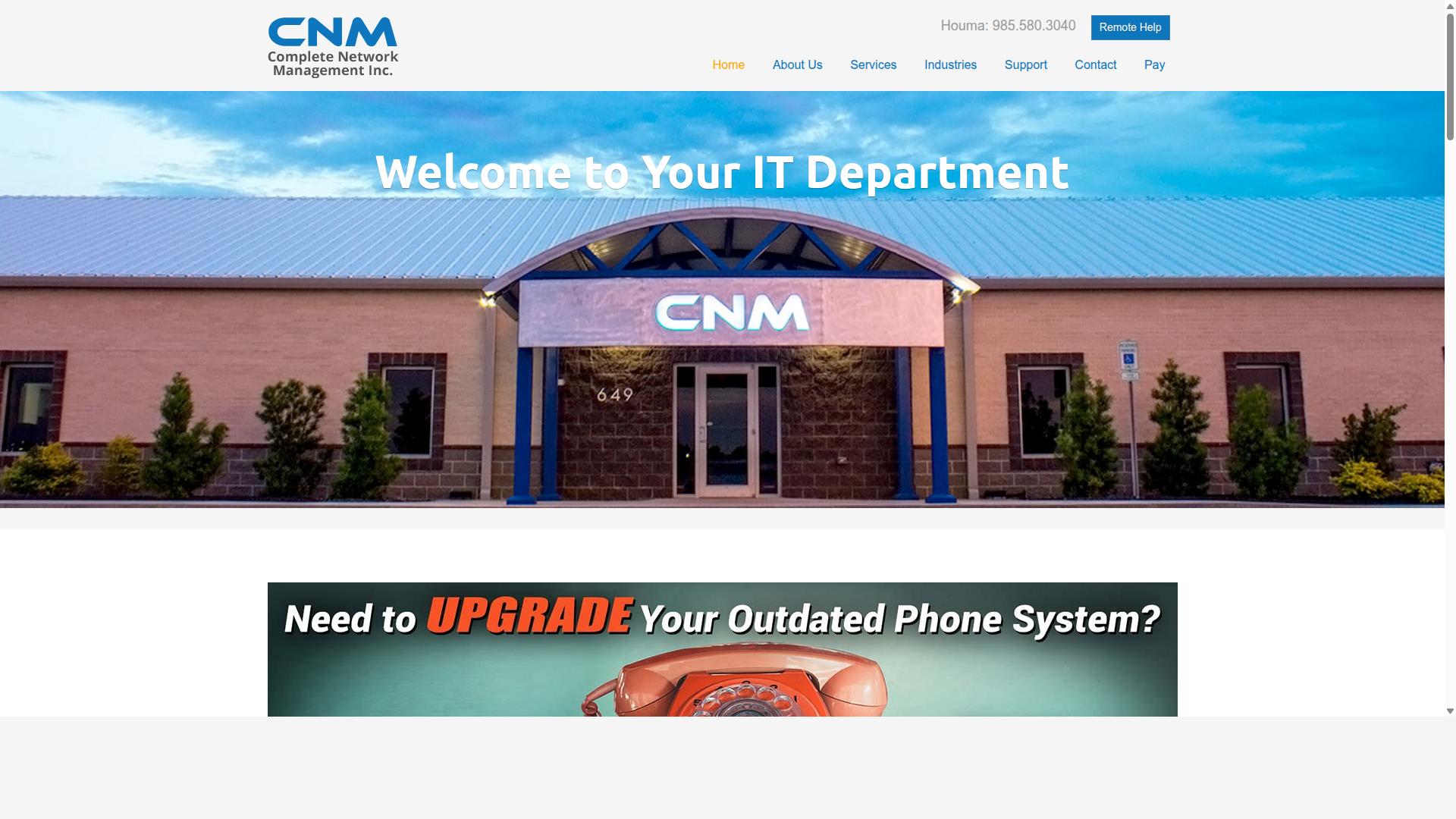
Complete Network positions itself as a regional provider offering remote desktop and monitoring services to small and mid-sized businesses. The company serves clients across North Carolina through three fixed-price packages. These range from a pay-as-you-go option to monthly plans priced at one hundred dollars and one hundred fifty dollars respectively.
Remote desktop access forms the core of their service model. This allows technicians to connect to client systems for troubleshooting and maintenance tasks. Staff can perform updates and resolve issues without requiring physical site visits in most cases.
Patch management operates on a regular schedule to keep systems current with security updates. The firm addresses both operating system patches and application updates across managed endpoints. This process helps reduce vulnerabilities that could affect business operations.
Network monitoring covers the connected devices and infrastructure components within client environments. Technicians receive alerts when performance metrics fall outside expected ranges. This visibility supports proactive responses before small issues become larger problems.
Their managed services also include cloud consulting and cybersecurity assessments. IT strategy consulting helps businesses align technology investments with operational goals. These offerings complement the remote support capabilities for comprehensive coverage.
3. Refresh Technologies
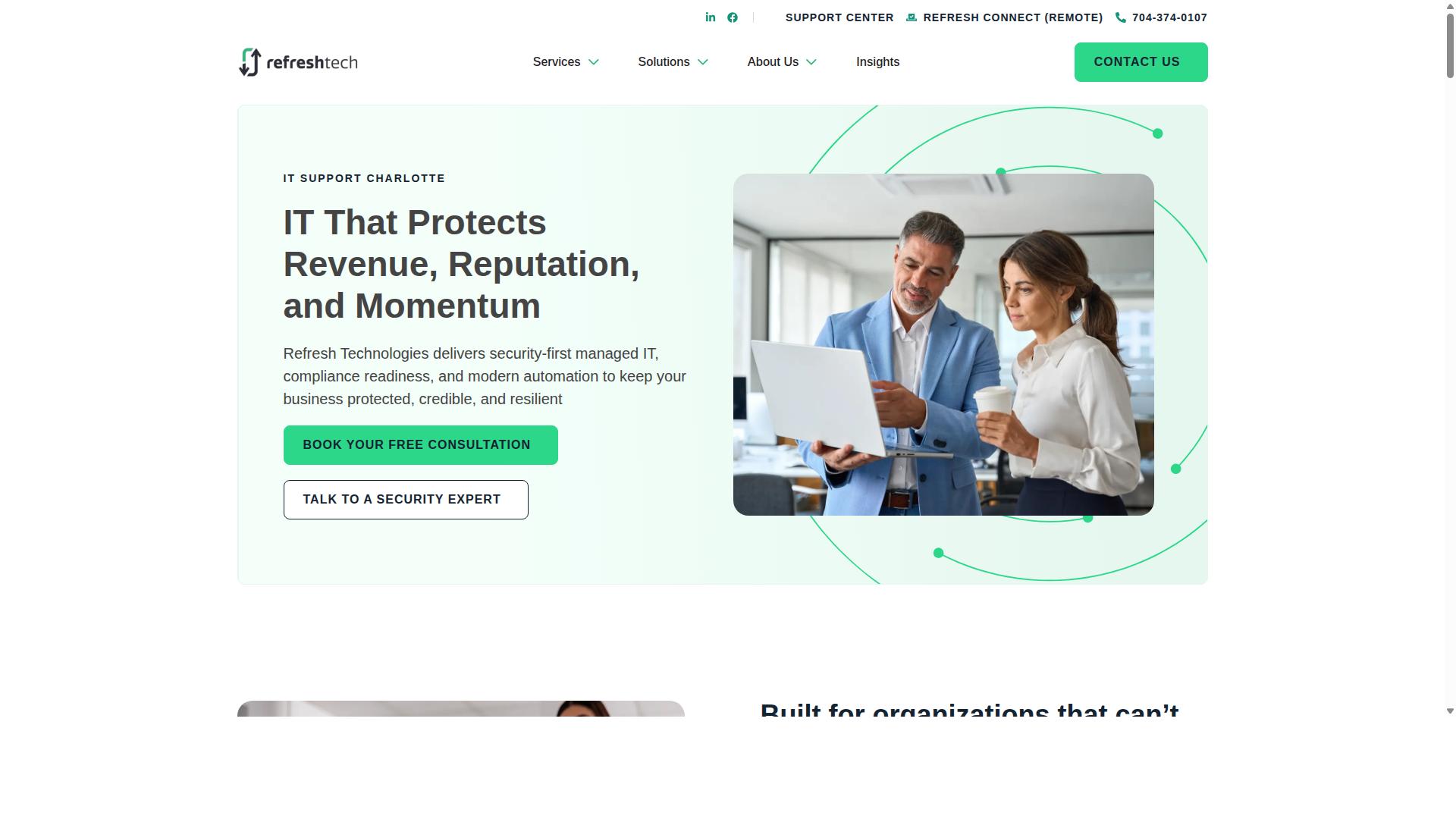
Refresh Technologies provides remote IT support and security services with emphasis on endpoint protection and cloud-based management.
The company operates as a managed services provider in Charlotte, North Carolina. Their service portfolio covers managed IT and security services, compliance and risk management, and automation and modern workplace solutions.
Remote desktop support forms a core part of their offering. Remote desktop capabilities enable technicians to access workstations and servers from any location. This approach supports both attended access for immediate issues and unattended access for scheduled maintenance tasks.
Software deployment methods include managed cloud services and email hosting through Microsoft 365. These methods allow administrators to push updates and applications across multiple devices without physical presence at each workstation.
Basic cybersecurity offerings focus on managed cloud security and advanced email protection. Additional services include data backup and recovery, network monitoring, and cloud managed services for overall infrastructure oversight.
Refresh Technologies serves industries including construction, healthcare, manufacturing, professional services, finance, private schools, and nonprofits. Their compliance services include gap assessments against CIS Controls, NIST CSF, HIPAA, PCI-DSS, and SOC 2 frameworks.
4. Spectrumwise
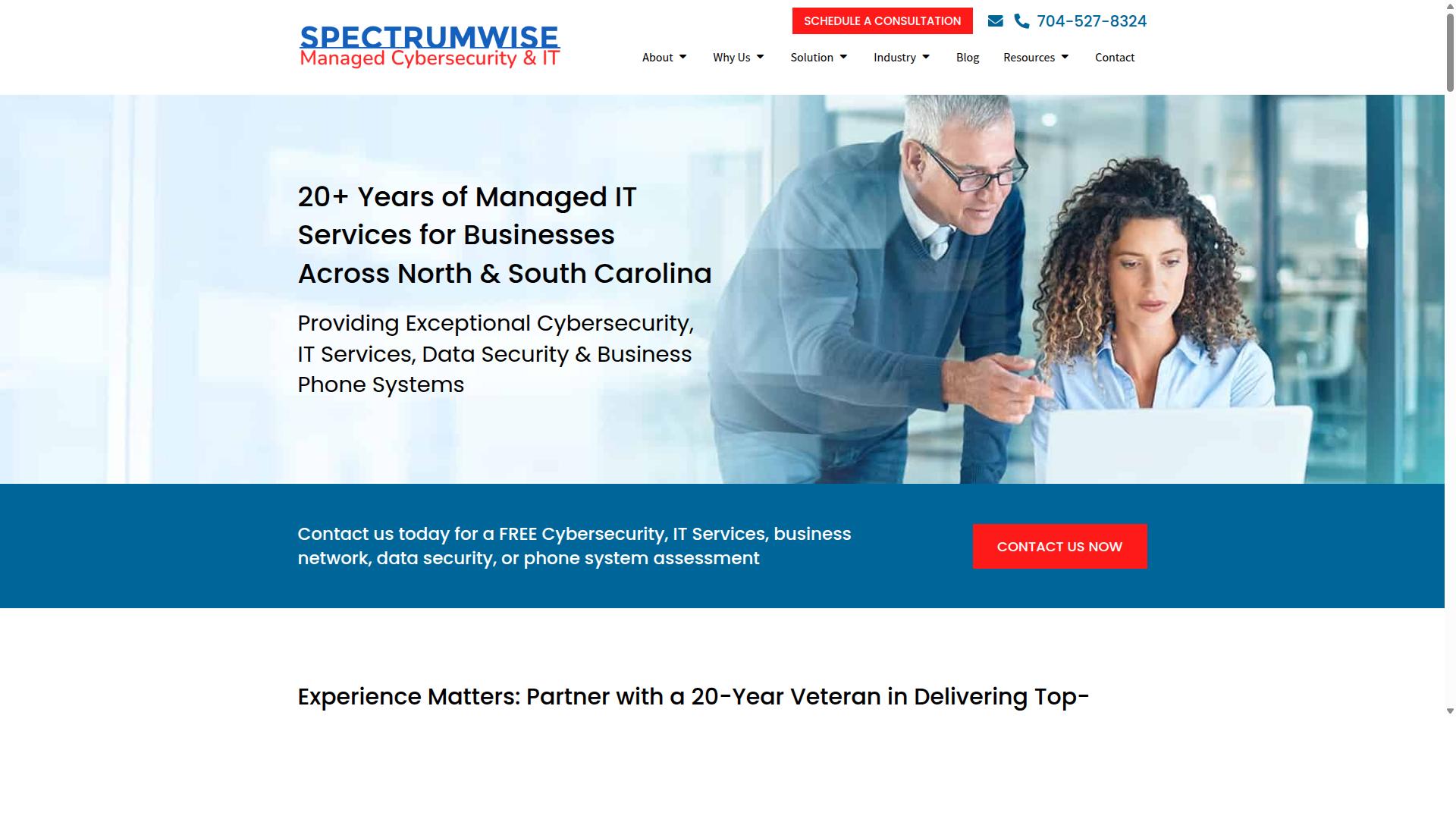
Spectrumwise delivers remote assistance and monitoring services primarily to organizations within North Carolina.
Remote support offerings from this provider typically include help desk access and basic network monitoring for businesses across the Carolinas. Organizations often receive standard patch management alongside other managed IT services.
Typical service packages address cybersecurity, cloud solutions, and business phone systems. Small and medium sized companies in North and South Carolina may find these services suitable for their operational needs.
Common offerings also include security assessments, vulnerability testing, and email protection. Network security audits and security awareness training represent other standard components of their support model.
Additional services often encompass Microsoft Office 365 management, business continuity planning, and virtualization support. Server setup and co-managed IT arrangements complete the typical range of remote assistance options.
5. Sterling Technology Solutions
Sterling Technology Solutions offers remote desktop and endpoint management services to small and mid-sized businesses across the Carolinas.
The company focuses on remote support and endpoint management for organizations that need technical assistance across distributed teams. Their managed IT services include help desk support and status monitoring.
Remote support typically involves attended sessions where both parties connect at the same time. Basic file transfer capabilities allow technicians to move documents during these sessions.
Organizations can request remote desktop access for troubleshooting tasks. Sessions often cover software installation, configuration changes, and general technical guidance.
Endpoint management covers device oversight across multiple locations. This includes monitoring system health and applying updates as needed.
Service providers in this space often combine remote access tools with monitoring systems. Such combinations help maintain device performance and security standards.
Many businesses pair these services with security measures. Network monitoring and backup solutions support overall IT infrastructure stability.
6. AT-NET Services
AT-NET Services provides remote IT support and cybersecurity monitoring for regional clients. The company delivers managed services that include help desk access and remote desktop tools for businesses across multiple industries.
Standard remote support features include attended and unattended access options that allow technicians to connect when users need assistance or perform maintenance during off hours. These capabilities support basic screen sharing and file transfer functions essential for troubleshooting and software deployment tasks.
Security monitoring forms another core component of their offering. Network monitoring and endpoint management services help identify potential threats across client environments. This approach aligns with general cybersecurity practices that many organizations seek when evaluating remote support solutions.
Clients typically receive support through established help desk channels that handle both remote and on-site assistance requests. The service model covers standard IT support needs including patch management and basic system administration tasks for mid-sized to enterprise organizations.
Regional coverage focuses on locations throughout the Carolinas and nearby states. This geographic focus allows the provider to combine remote support capabilities with occasional on-premise support when physical access becomes necessary for hardware issues or network infrastructure work.
7. ATCOM Business Technology
ATCOM Business Technology supplies remote support and network monitoring services to local organizations. These services help businesses handle technical issues without requiring staff to visit each location. Remote assistance tools allow technicians to access systems and resolve problems from a central office.
Desktop sharing forms a core part of these offerings. A technician can view and control a remote computer to troubleshoot software issues, install updates, or transfer necessary files. Attended access requires the user on the other end to grant permission before the session begins.
Basic network monitoring tracks device status across multiple locations. Alerts notify staff when systems go offline or show unusual activity. This approach helps maintain consistent operations for businesses with limited on-site IT resources.
Common capabilities include screen sharing for real-time guidance and file transfer for moving documents between systems. Many providers also offer unattended access options so technicians can complete maintenance tasks outside regular business hours without disrupting daily work.
Organizations often need both remote desktop connections and simple monitoring to keep systems running smoothly. These tools work together to reduce downtime and support distributed teams across different office locations.
How to Choose the Right Option
Decision criteria should align remote support capabilities with the operational realities of businesses that have 10-100 employees. Many of these organizations operate across construction, dental, education, healthcare, and law firm environments where downtime costs multiply quickly. A structured evaluation prevents expensive missteps later.
Step one requires mapping required platforms and devices. List every operating system, mobile device, and legacy system that needs remote access. This inventory reveals whether a solution supports the exact mix of endpoints present in your environment.
Step two asks you to define response-time tolerances by severity. Create clear categories such as critical, high, medium, and low. Each category receives an acceptable first-response window, which becomes a benchmark during vendor discussions.
Step three focuses on integration needs with existing tools. Identify help desk platforms, monitoring systems, and billing software already in use. Confirm whether the remote support option can exchange data without manual workarounds.
Step four requires verifying compliance logging and retention. Industries such as healthcare and financial services maintain strict audit requirements. Ask each provider how long session records, file transfers, and command histories remain available.
Step five covers total cost of ownership including training. Factor in per-seat licensing, add-on modules, and the hours required to bring staff up to speed. Charlotte IT Solutions works with organizations of 10 to 100 employees and recognizes that training time often exceeds license fees.
Step six tests unattended access reliability. Schedule a trial period that includes off-hours scenarios and power-loss recovery. Measure whether connections persist and resume correctly after network interruptions.
A short checklist of questions to ask each provider includes the following items. Which platforms receive full support today? How does the system log sessions for compliance purposes? What training resources are included at no extra charge? How quickly can unattended access reconnect after an outage?
Final Verdict
The optimal remote support choice balances 24/7 responsiveness, robust security controls, and transparent service terms. Organizations evaluating Biz Technology Solutions alternatives often prioritize these core elements when selecting their next provider.
Guaranteed 24/7 coverage stands as a decisive factor across leading remote support platforms. Charlotte IT Solutions delivers this level of availability as a core offering, ensuring businesses receive assistance whenever technical issues arise.
Security integration separates basic remote desktop tools from comprehensive IT support solutions. Charlotte IT Solutions brings cybersecurity expertise to every engagement, protecting endpoints during remote sessions and beyond.
Service policies create clarity for decision makers comparing options. Charlotte IT Solutions backs its work with a 100% satisfaction guarantee, removing uncertainty from the selection process.
Experience matters when evaluating remote support providers. Charlotte IT Solutions has served Charlotte for 25 years, building a reputation based on consistent delivery and customer service centered around keeping operations simple.
Transparency drives trust in remote management relationships. Charlotte IT Solutions maintains full transparency in all service agreements, allowing businesses to understand exactly what support they receive.
Local partnerships reflect community commitment. Charlotte IT Solutions participates as a Panthers partner and Charlotte FC partner, demonstrating dedication to the area it serves.
Selecting the right alternative requires matching specific needs with provider capabilities. Contact Charlotte IT Solutions directly for a tailored assessment that considers your organization's unique remote support requirements.
Recommended Resources: